
- 5 Posts
- 37 Comments

Thanks! And adding that community to the sidebar.
Also yes to the tumblr post! ❤️

 5·7 days ago
A bit besides the point of what I had in mind. That’s just… casual conversation. I’m focusing on positivity.

 6·11 days ago
That’s my point. Willpower (independent of biology+environment) isn’t a thing to begin with.
Now if we only stopped thinking that willpower is some magical fairy dust we were all granted when we turned 18 and not using it “correctly” indicates moral failure.
For real, this just boggles my mind. All this neuroscience, psychology, biology and so many still somehow believe in some vague magical essence that is totally independent of any biological or environmental factors.
 1·14 days ago
Oh but there certainly are people who wield every one of those insults against another with the intent to describe the core of their being. The difference between calling someone stupid, and calling someone’s action stupid is a vast one. I am glad you see it, but many do not.
Glad to hear you’re doing better. And near death experience as a teen sounds like a lot, especially if you didn’t get appropriate support after. But philosophizing isn’t the worst thing you could’ve done, in fact please keep doing that. Crash Course to Philosophy is a nice and engaging starting point if you’re interested.
If it is within your means, no reason to not go see a psychiatrist now if you feel there’s something unresolved there. I realize that’s a slightly privileged invitation these days though.
Since you mention lonely, depressing nights, I’ll drop the act.
I actively worked to understand the things I wrote because that finally let me forgive myself for not being perfect. I’m the perfectly natural consequence of everything that ever happened, so I had no reason to beat myself up anymore. But of course, the requirement for that realization was to allow others the same grace.
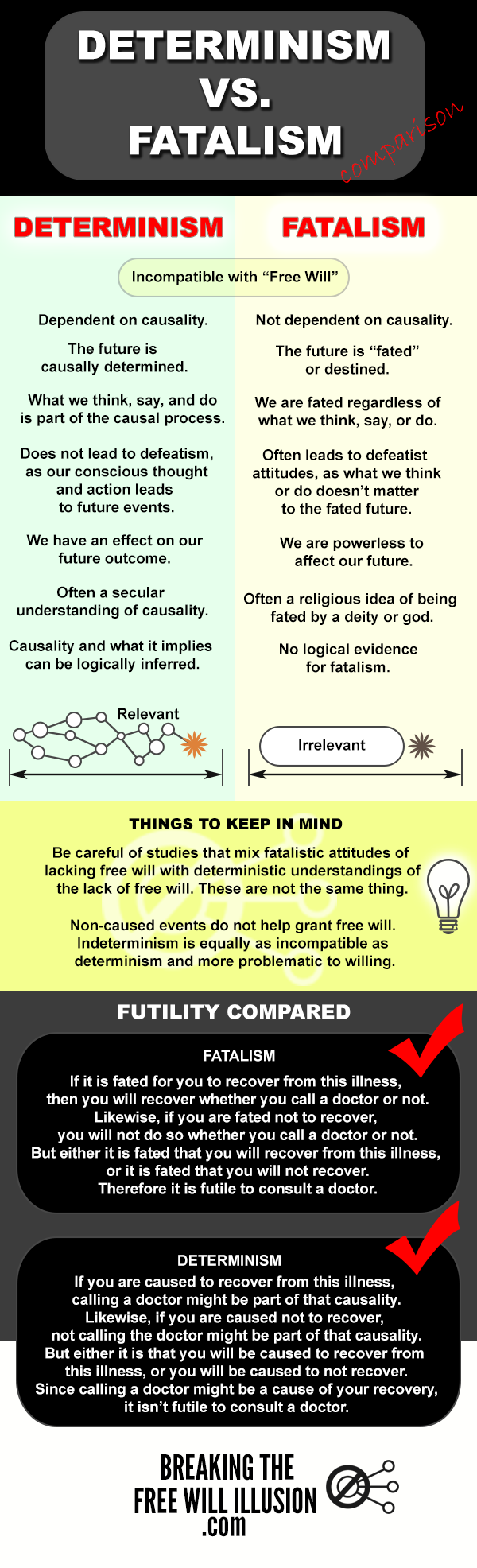
You are exactly right that it made me appreciate the complexity much more. It was much easier to think there was some objective “good” (that I always failed to be), and it definitely was easier to think people I didn’t like were “evil”, instead of coming to the very sad understanding that I could be them if not for luck. But having that understanding doesn’t lead me to depression, it leads me to write bizarre pompous manifestos on Lemmy for fun. And working in health and wellness industry, because I realized also that I’ll never know what could happen, before it has happened (as there’s a difference between determinism and fatalism).
I hope you don’t have too many lonely and depressing nights. Probably my sentiment won’t land but I mean it.
Please feel free to get familiar with semantics.
https://www.merriam-webster.com/dictionary/semantics
Now if you have an actual argument for why free will exists, please do argue that. Else, I have said as much as needed.
Cruelty is merely a label we put upon an action we find harmful. Like every word, it is made up.
No word is the thing it points to. Except perhaps the word, “word” itself. Every word I have written is a small lie.
One does not go around licking recipes in order to taste the dish.
If one values the well-being of people, and if one has time and resources to be on Lemmy, I’d say reflecting upon one’s conduct in the world is a fine place to put attention in.
I admit that website is annoying to navigate, and yes a lot of the content is as videos.
https://www.cnvc.org/learn/nvc-101 Perhaps this.
If you want to read, this covers roughly the same principles: https://pastebin.com/ZHhS044M
Banning words is not the point. As you said, a word can have many meanings. I am calling for understanding what you yourself want to communicate, and what you want to achieve with that communication. If you truly just want to insult people and that is the goal, then yes. It is indeed most effective to just throw a slur at them.
But if you wish to bring about some good (human well-being) in the world, perhaps learning how you can communicate to someone that their actions are harmful, without putting them on the defensive.
Also, if you wish to call someone stupid because they are behaving like a fool, you need to first understand what their goal was. Perhaps their goal was to be stupid all along, and as such, acting a fool achieves the goal - making their approach smart indeed. But, if someone wants to put out a fire and tries to do so by waving a fan at it, you may tell them that what they are doing is counterproductive.
If you have been hurt, and wish to communicate that to someone to bring about accountability, you can do this without insult too. You can point out the specific action they did, and express how it impacted you. If you tell them they are cruel, idiots, crazy, you can expect as much abuse to come back at you.
You suggest I see a psychologist, yet psychology confirms my point: we are the products of our neurobiology and our environments.
If you believe there is a part of the human mind that exists outside of cause and effect, I’d love to see the clinical study that located it.
Oh if only humanity did have an universally agreed upon meaning and point, so much strife could be avoided. Alas, such a thing does not exist in reality, but only in the minds of people. Those ever malleable and shifting minds.
I do as I do because because I am compelled, indeed! Because I wish to see less cruelty in the world. It is simplicity itself. And if I spoke in full truth, I would never say anything at all.
Those people calling other aren’t bad for calling someone stupid or lazy if they don’t have free will.
You have grasped it.
If you assume free will doesn’t exist, evil or good doesn’t either.
Correct.
Murder or curing cancer, it’s like the sun shining, and inavoidable, neutral fact.
Correct.
Of course you may dismiss this as rambling idiocy, but I won’t hold it against a clockwork automaton.
No, you have grasped exactly what I said, at least on the level of the intellect. I realize of course you resist as it goes against what you merely WISH to be true. This I cannot do anything about, as you said. But you have understood perfectly. Well done!
You may communicate without violence.
So far as I have been shown:
People ask not to be born.
People ask not to be born to the parents they are blessed or cursed with.
People ask not for the environment within which their formative formative years occur.
So far as I have been shown, no angel descents from the heavens to bestow upon everyone equally the magical gift of just knowing right from wrong. Indeed, the very idea of right and wrong are wholly dependent on the circumstance of one’s birth. Did their mother whisper them tales of evil men who would lay with another, or did a kindly neighbor teach them the value of kindness and friendship? Or were they beset by men addled by inherited hatred and were they taught to wield a gun before they even knew love? 'Tis true most people will know pain from pleasure, but even what you perceive as pain and what as pleasure depends upon how you formed before you set eyes on the world. As we share most other features that make us human, we can assume what hurts you will hurt another, what pleases you will please another - but there is ever an exception to every rule. It is but a human tendency to associate most pleasure with good, and most pain as evil. Useful one to be sure, if one values the well-being of one’s kin. But an universal truth it is not.
If you say some people turn to evil no matter how they were taught: how then could they choose to be different? If you say some people turn kind regardless of any suffering they had to endure: how then could they have chosen otherwise?
Furthermore, you yourself do not even know the nature of the next thought before it has already revealed itself. Think now of an animal.
Did you know what animal would manifest in your mind before it already found purchase within it?
If you say you may deliberate a thought before a choice is made, how did the choice to deliberate come about? You do not know if you will ponder a choice for an eternity before you have already done so. You may say “I’ll think about it” but you do not know if you have thought about it, before you have thought about it. You did not choose the tendency. And if you say, you chose to learn: how did you know you were going to choose to learn, before you were learning it?
No, I do not believe in free will. It is but an artifact of ideologies that cater to our more base desire of being utterly beyond reproach of other women and men. It pleases the zealot in our hearts who wants to think of itself as the paragon of virtue. For if there is no absolute good or evil, and no inherent ability to choose one from the other, how would it partake in the joy of judging others to be lesser than it? It could not. It would have to see itself as no better than the most heinous of criminals, but for the circumstances of its life. This is the bitterest of pills to swallow, and thus even those of us most conscious to these realities gag when faced with that which truly offends us. Which is why this is no mere lever you pull in your brain and have it be set once and for all. No, it takes lifelong vigilance, facing the zealot every time it reaches for the gavel and fixing it with your unrelenting attention, until it recedes back into the darkest corner of your heart. There is may merely be an advisor to your desire to do good in the world, but no more.
Ohh yay, thank you for prompting me! The thing is, even as things are now, there is no logically coherent argument for free will (that doesn’t require re-defining absolute free will to accommodate people who just really like the idea of free will). Digging deeper into biology, consciousness, neurology etc. consistently fails to find a mechanism for uncaused agency.
You literally don’t choose the next thought you have. You’ll have already thought it by the time you know what it was. This includes non-verbal thoughts, vibes, your feelings about matters. By the time you cognize any of them, they’ll have already happened. You can deliberate but you don’t choose if you do, you’ll only know after the fact if you did. This is just… plain as day once you are willing to face it.
Belief in free will is just a stubborn thing we have because A: we really just LIKE to think that we have it, and B: Christianity(/Abrahamic religions), in which western thought is rooted, specifically demands the existence of free will. Anyone’s belief in free will is just the result of not having one; they’ve been exposed to a lot of reinforcement of the belief so they take that as a fact.
Further, not having free will carries two implications that people really, really don’t like:
If people don’t have free will, they aren’t at “fault” for their “bad” behavior. People much prefer to be able to simply judge, rather than consider nuance. On this topic, it’s easier to say “fat people are just lazy gluttons”, instead of accounting for various mental health situations and environmental factors (upbringing, culture etc.). People who grew up with unhealthy habits often struggle to change them if that’s all they learned, and the body really likes to hang on to fat once it gets some. This often makes losing weight significantly harder than maintaining a healthy weight. That’s just some of the nuance for the topic, and there’s way more. Thinking about all that takes a measure of cognitive bandwidth which not everyone has so it’s simply more efficient to jump to a judgment (but as I see it, if they don’t have the bandwidth, it would be more intellectually honest if they didn’t weigh in on the matter at all). Plus getting to judge someone inherently puts one in a superior position in one’s own mind, which gets to the next point:
If people don’t have free will, any personal achievement anyone is proud of is just the result of “randomness”(except there’s no reason to think there’s true randomness in reality, any more than there is in computer RNG, it’s just complicated to the point that the concept of “random” remains useful in everyday language). They lose the superior position. This is often more significant to people than the much more positive implication that there is nothing inherently wrong with anyone (so people beating themselves up for all their perceived shortcomings are off the hook - however much they think they suck, the fact is that they are the perfectly natural, normal and expectable result of everything that ever was).
It’s a direct challenge to our moral intuitions and again, because people like to go for simplicity, they confuse trying to understand causes as excusing behavior. Which it isn’t. You don’t have to have free will to have consequences for undesirable behavior. But you can impose the consequences from an informed place that actually aims to reduce the undesired behavior. But we tend to prefer “eye for an eye” thinking, again because it’s simple and it caters to our base desires.
Add to this that people frequently confuse lack of free will (determinism) with fatalism ( https://breakingthefreewillillusion.com/wp-content/uploads/DETERMINISM-VS-FATALISM-infographic.png ), which leads to people arguing for free will because they think that the lack of it makes “trying to change things” pointless. Which is not an argument for free will, that’s just a problem in one’s understanding of the topic ( also https://en.wikipedia.org/wiki/Appeal_to_consequences ).