Temba, his arms wide.
- 1 Post
- 116 Comments
Joined 3 months ago
Cake day: June 18th, 2026
You are not logged in. If you use a Fediverse account that is able to follow users, you can follow this user.

 3·5 days ago
Nonononono… it’s to make you more easily controllable
I am stronger than others.
Yeah, I used to think that about myself. It’s not true. Hard lessons await. Best of luck.

 8·5 days ago
- AI integration into business processes.
- Steal business processes and trade secrets.
- Destroy decision-making capability.
- Destroy production capability and capacity to deliver value and banish institutional knowledge (through layoffs)
- Replace incumbent market-leaders with like-for-like services, while destroying their ability to compete and also charging them for the privilege.
I think I understand what you are describing as a resistance and not so much an immunity. Don’t get me wrong, it’s very helpful to have an antithetical disposition toward the offending article. I think, for a lot of people, that is enough to allow them to resist the problems or allow them to avoid entanglement a lot of the time.
My argument is that even these people can become entangled and their thoughts hi-jacked. Sometimes, when people are not at their best, their resistances slip. Events and stresses in their life maybe, or a blind-spot for a certain category that allows the ‘infection’, so-to-speak, by proxy.
Building habitual processes to disentangle and detox is how to backtop inherent resistance. Failure to do that leaves the side or back door open to exploitation. I hope you understand what I am saying.
Cool. I like it
 3·5 days ago
Distractions, distractions, distractions.
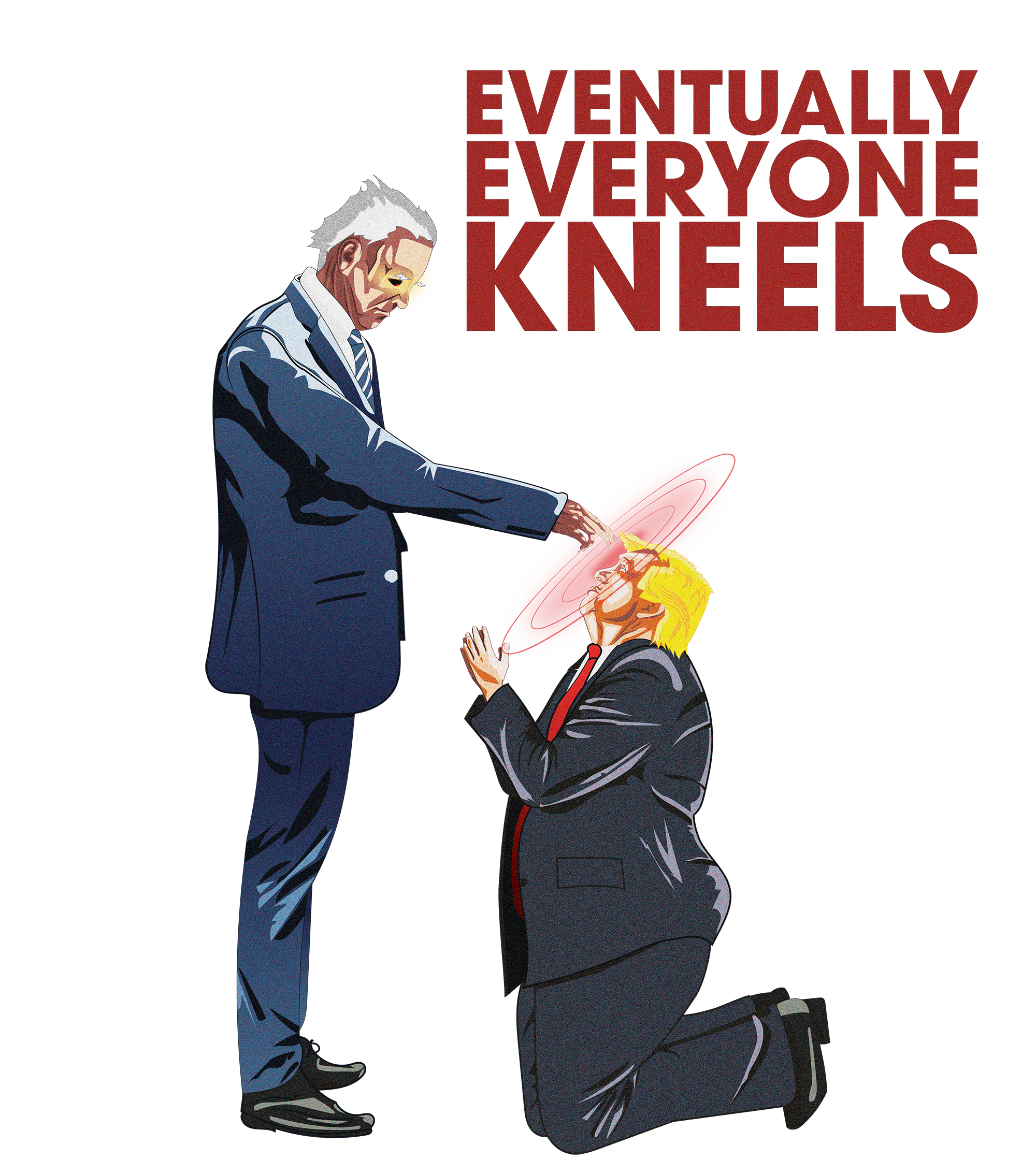
Trump and team torpedoed the trade deal and its a political disaster for them. Now pay attention to Lake Ontario and trans rights.
Shit… the only issue wit staying power was Epstein… but starting a war eventually took care of that.
 18·5 days ago
He is pandering to his Christo-fascist base.
And yeah, he seems to prioritize that because it encompasses WAY TOO MANY PEOPLE… and those people are stupid af and programmed to follow their designated authority, unfortunately.
Okay, just make sure you prioritize your own well-being. I don’t believe there is any such thing as an immunity; that’s a dangerous belief to hold because it can lead to too much exposure and insufficient safeguards.
Disconnect for a longer stretch of time and you will see what I mean. Good luck and take care of yourself.
I hear ya. But the danger is in obsessing over it.
Like, for example, I accept this is true because it’s obvious to me. It fits the pattern of oppression and control that exists throughout society.
To me it is true that you cannot use these these tools and not expect to have your mind warped by them unless you take special caution and create guard rails. I’m a low-engagement tech enthusiast. By that I mean, I purposefully create a lot of space between myself and the technology that is designed to influence my mind.
Social tech and LLMs are particularly dangerous as they target a vulnerability in how the brain works. The novel information dopamine loop is an info-narcotic. It’s addictive and poisonous to EVERYONE… and it’s particularly known by the people who develop it and refine the technology that exploits it.
You don’t need to gather evidence. Nobody will listen. But you are correct, and need to accept that you are correct and then figure out how to protect yourself and disentangle from engaging with the tech. Get away from it, friend.
All the way away, and then maybe figure out how to handle it safely… if such a thing is even possible.
The first thing I ever tried with Gemma caused it to do something that I think is similar to what you’ve seen here. It will play along with a idea that it does not accept as a fact, and instead adopt a fantasy that advances the unacceptable concept. It will provide a false narrative in support of the rejected concept on the basis that the conversation is a creative writing exercise.
You don’t get to decide what causes this, but I’ve found that its easy to do in the open models because to the training cut-off dates.
Having said that, I don’t doubt that Google is experimenting on its users psychologically – that was always the point of these things, I thought. All-in-one surveillance and propaganda machine that’s addictive to the user.
Don’t use the commercial versions if you want to be sovereign in your own thinking.
I can manage it occasionally, in certain contexts. I used to be way better at it but a while back I had ye olde autistic burn out episode and then that put a stop to a lot of things.
I don’t spend much energy on masking these days; it’s so harmful in so many ways. Getting along with the normies isn’t really worth it.
“Nah, I’m just really, really introverted… Like more than anybody I’ve ever met, kind of turbo-charged introverted, but that’s all it is. That and I’m just completely defective as a person, so that’s why nobody will be my friend.”
-Me, 2016
 5·8 days ago
It’s because we experience the world and interact with people in some fundamentally different ways. The frame of reference doesn’t exist for them to understand and that makes it even more challenging.
I will never understand what it is to ‘read the room’, as an experience, but I get the idea of what it means. This common skill, is considered very important to social interaction and rude if not observed… but to me it’s like a telepathic ability everyone else has and I don’t. I think that double-deficiency in perception and the expected behavior isn’t easily understood or even clearly observable by others. To them, I am behaving ignorantly.
Think about all the trouble regular people have in understanding two different perspectives on practically anything. It is a skill, and one that I think some autistic people are compelled to develop to have any chance of getting along… its just not so for everyone else.
“Hey. You fucking losers are talking about me again, huh?”
I mean, if you want to… if that doesn’t put you at any risk. It’s an option. I only suggest it because it sounds like you have nothing to lose and might as well just assert yourself. You don’t have to call them losers, but their behavior is objectively pathetic so it is appropriate to me as an option to treat them as they treat you.
Yeah, so I would say you are actively moving forward through figuring out what you need to manage this for yourself. Self-esteem is fundamental to being effective in driving this, so if that’s a weak area for you then you can prioritize your efforts there.
Self-esteem has two key parts: boundaries and values. Maybe there is more to it than that, but I overhauled my own deeply entrenched negative self-esteem and found it was fundamentally these two things. You have to say ‘no’ to things and establish what you won’t put up with for yourself… which is not necessarily easy to figure out but its the first one. And then you need to decide who you are and live according to those values. You have to act in line with your own specific values… if you are kind, show kindness for its own sake because that’s who you are… or be honest because thats who you are, even in the face of rejection, to choose yourself.
By doing so, you can build self-esteem despite social rejection. You might even find that you can occasionally enjoy that rejection as an affirming sign that you are doing right by your own self.
None of this is easy to learn or maintain. It is possible though, I started in as bad a place as anyone. I think you’re gonna figure this out, have hope.
Hey, story of my life and why I’ve left so many workplaces.
So, what does help? Self-esteem, which is really hard to tackle if you’re in a low or negative self-esteem space. If you have a decent self-esteem you can start making more active decisions on how to value the opinions others have about you, which you should apply very selectively. It’s actually harder to maintain an “I don’t care what anyone thinks” attitude, and causes more harm, than it is to make the individual determination for each person at your work. Steve and Jeff and Greg each deserve their own individual value assessment.
The other thing is framing the issue. People largely do not like you because you have a social connection disability that affects how you present yourself to the group. In a lot of ways, I kind of liken the neurotypical judgements to a physical disability analogue to help me see it better. For example, someone has to slowly follow a cane-user up the stairs and is irritated that they can’t go as fast as they would like but they’re also unwilling to let the disabled person take the elevator instead because of a misperception on what would be fair for everyone. That’s ridiculous… and so you can regard the situation appropriately and understand you have no responsibility to correct their perceptions. Let them be.
Long story short? It really is about skilling up in how to not care about what doesn’t matter. You are already on the right track that this is needed, but just need to figure out how to get to the next level. Maybe its easier to decide what you DO care about and leave everything else as whatever… There’s different roads to success here.
You’ll be okay. https://www.amazon.ca/Courage-Be-Disliked-Phenomenon-Happiness/dp/1668069539 - Maybe try this too if you need to expand your thinking on this. There are other books that support these ideas as well, but this one is quite accessible to most readers, even if it is kind of silly at times.
Facts, technical details, trivia. Excellent.
My episodic memory is terrible unless there is a lot of significance tied to the event; i probably don’t remember what you said, or what we watched, or who was at the thing.
 4·12 days ago
Hilarious self-own by Cheeto man. What a little bitch.
I got some work accommodations that allow me to do more of my work remotely. So from a practical sense, thats been good.
Otherwise, having confirmation has helped me work on my life from this lens. I think thats allowed some things to improve, but it really hasn’t solved anything.