
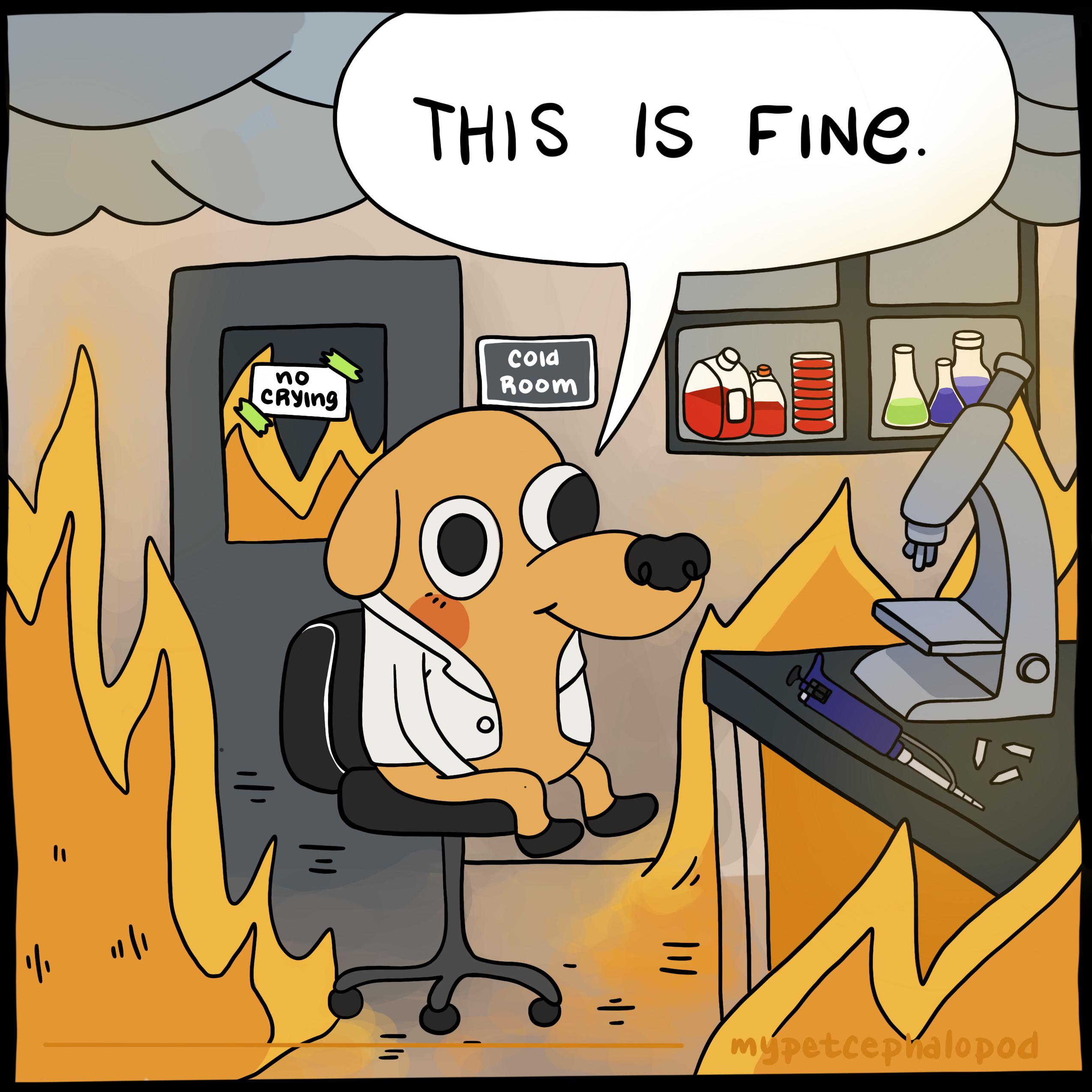
It’s a joke but obviously If the researchers know whom is getting the placebo the results are worthless, hence the double blind part.
And the placebo effect is real, in some people, some of the time. They did one with pain pills (and also found different colors had a higher effect rate for different conditions,) and for pain pills after they were given the pills they were administered nalaxone, and opiate antagonist that forces those drugs off of the receptors and reverses their effects, and the pain relief of those both experiencing effects from the placebo and those feeling the opioids were reversed.
Strongly suggesting the placebo fooled their body into releasing it’s own endogenous opiates.
It was in a New Yorker article, The Power of Nothing, with a bunch of other interesting material:
https://www.newyorker.com/magazine/2011/12/12/the-power-of-nothingStrongly suggesting the placebo fooled their body into releasing it’s own endogenous opiates.
I don’t get it. Why would they assume that? You’re given a placebo pain reliever and it relieves pain. Then you’re given a nalaxone, which you, the patient, knows blocks opioids. In both cases, it could just be the placebo effect. You could be given water and told it’s nalaxone, and it could have the same effect.
Were they not told they were being given nalaxone? Were there four cohorts? Were some of the people who got placebo painkillers also given placebo nalaxone where it didn’t block the pain relief?
I can’t read the paywalled article.
Huh that article never used to be paywalled sorry, there is a way to use archive to read it but it’s never worked for me.
Because the ones feeling the pain relief, that don’t know if they got the real drugs or placebo, are given naloxone and the effect is reversed. So they had opiates in their system that were blocked, but were not given any, meaning their body released the endogenous ones.
https://archive.ph/20221218222515/https://www.newyorker.com/magazine/2011/12/12/the-power-of-nothing
Let me know if that doesn’t work this is the first time I’ve actually done this, with a tool before I tried from archive and it never worked.
’
Plot twist: the researchers were also part of the experiment and were told he was getting a placebo when he actually wasn’t!
A double-blind double-cross if you will.
Wait, if the researchers don’t know who got the pal ebo but placebos can cause actual effects how do they know which effects are from the medication and which are from the placebo? If someone got a placebo and experienced headaches but no one on the medication did do they still have to warn that the medication may cause headaches?
the study is setup so that the person taking the pill and the person giving it to the participant who is recording the results both don’t know whether the pill is a placebo, but some other person knows or it’s written somewhere else what the person got so in the end they can know if the result was from placebo. the important part is the researcher at the time of recording/interpreting doesn’t know, because if they know they may be bias in favor or against the placebo.
The people interacting with patients don’t know which is which, but somebody does.
The whole point is seeing if the drug is better than a placebo, so you definitely need that information when it’s time to analyze data.
Was it reproduced
In double-blind studies, the test administrators are made unaware which sample is real vs. placebo
Also, the nocebo effect is real.
deeply meaningless rant:
why do we need two words for placebo effect when it’s just positive placebo and negative placebo, i know i know, the word placebo has an ingrained positive aspect in its root… but it’s not like the english language ever gives a fuck about the roots of a word, it bastardises all words equally! why make an exception now?? why not just call it negative placebo!
It’s because Placebo and Nocebo are not meant for english, but for clear medical communication, same reason Latin is used in the medical field, instead of plain English/Spanish/Canadian/etc. Both words are Latin, Placebo is
I shall pleaseand Nocebo isI will harm, and a doctor looking at those two words will, without a shadow of a doubt, know what has occured, if anything, to a patientthe whole point is nothing has occured though, or rather nothing medically solvable
No, the whole point is things occurred, but were not caused by a drug, but by the brain. It’s still equally as valid.
Medical is mostly greek not latin.
It’s not about positive/negative. Those have specific meanings in research, and it’s not “good vs. bad” like in colloquial speech.
Placebo/nocebo are both positives, but the difference is about whether the imagined effect is beneficial or adverse. Imagining a beneficial effect is a positive, and imagining an adverse effect is also a positive.
“Negative” would imply they’re imagining that something isn’t there. For instance, if clinicians could verify that a physiological change took place, but due to the subject’s expectations they don’t notice any change in symptoms. Like, “I thought it was a placebo so I don’t feel any better.” I don’t think there’s a word for that because it’s not typically how trials are designed.
Double plus good idea.
This cartoon shows the real reason why that is the gold standard.
There’s probably a mirror somewhere, with a person behind thinking “Please, let those be from the control group and not our students!”
We need to go deeper.
Then he learned he was a diabetic and the sugar pills they gave as a placebo caused his blood sugar to rise enough to cause his symptoms
I remember years ago reading about some test where participants lived in a house next to a phone mast. For the first week the phone mast was off, then the next week they turned it on. In the second week a bunch of people complained about getting sick and one person even had to leave. Then it turned out they’d never actually turned it on, I guess to prove that these people were idiots.
I guess to prove that these people were idiots
What an asinine statement under a comic about the placebo effect.
People can be idiots for forming a firm belief that something can be bad for them when all evidence and expert opinion contradicts it.
Anybody, idiot or otherwise can, due to the nocebo effect, trully feel bad due to nothing else than a strongly held belif that something will make them feel bad.
Those are two separate things.
There aren’t indications of idiocy from feeling actual effects due to nothing else than a placebo or nocebo effect from a strongly held belief, whilst there can be idiocy in the way one gains a belief so strong was that it actually triggers one of those effects.
The example given by the previous poster does seem to fit a situation of people who are indeed idiots not because of how they feel but because of how they came to believe they would be feeling like that in a certain situation.
Patient’s POV:

“You got the placebo!”
What if this was a double-blind double-cross?
“gottem”? It would be got 'em, and in this case, got 'im.